How to Assemble Modular Furniture: A Step-by-Step Guide
Learn how to assemble USM Haller and Klackjoy modular furniture with our detailed step-by-step guide. Includes pro tips and troubleshooting advice.

How to Assemble Modular Furniture: A Step-by-Step Guide
Assembling modular furniture like USM Haller or Klackjoy might seem daunting at first, but with the right approach, it's a surprisingly straightforward process. This guide will walk you through everything you need to know.
What You'll Need
Before you begin, gather these tools:
- Allen key / Hex wrench (usually included)
- Rubber mallet (optional, for stubborn connections)
- Soft cloth (to protect surfaces)
- Level (to ensure your furniture is balanced)
- Measuring tape
Understanding the Components
1. Ball Connectors (Nodes)
The iconic chrome-plated brass balls that join everything together. Each ball has 6 threaded holes arranged at 90° angles.
2. Tubes
Chrome-plated steel tubes in various lengths:
- 350mm — Standard height between shelves
- 500mm — Extended height option
- 750mm — Standard width
3. Panels
Powder-coated steel panels that form the surfaces:
- Side panels
- Back panels (optional, for closed units)
- Shelves
- Doors and drawers (for closed storage)
Step-by-Step Assembly
Step 1: Plan Your Layout
Before touching any components, visualize your final design. If you used our 3D Configurator, print out or save your design as reference.
Step 2: Create the Base Frame
- Connect four ball connectors with horizontal tubes to form a rectangle
- This creates the foundation of your first cube
- Ensure all connections are hand-tight initially
Step 3: Add Vertical Tubes
- Thread vertical tubes into the top holes of your base balls
- For floor-standing units, attach leveling glides or castors to the bottom
Step 4: Complete the First Cube
- Add the top layer of ball connectors
- Connect them with horizontal tubes
- You now have a complete structural frame
Step 5: Insert Panels
- Slide panels into the grooves formed by the tube framework
- Panels simply rest in place — no additional fastening needed
- For back panels, insert them before completing the cube
Step 6: Expand Your Design
- Continue adding cubes by sharing ball connectors
- Each new unit shares one vertical face with the existing structure
- This is the beauty of modular design — infinite expandability
Pro Tips
Tip 1: Work on a Soft Surface
Lay down a blanket or carpet to prevent scratching chrome components.
Tip 2: Don't Fully Tighten Until Complete
Keep connections finger-tight until the entire structure is assembled. This allows for small adjustments.
Tip 3: Use the Right Torque
Ball connections should be snug but not over-tightened. Over-tightening can damage threads.
Tip 4: Level as You Go
Check for level after completing each layer. It's much harder to adjust later.
Troubleshooting
Panels won't fit? Check that tubes are properly aligned. A slight misalignment can prevent panel insertion.
Structure feels wobbly? Ensure all connections are evenly tightened. Add back panels for additional rigidity.
Chrome scratched? Minor scratches can be buffed with chrome polish. For deeper scratches, replacement components are available.
Disassembly & Reconfiguration
One of the greatest advantages of modular furniture is reconfigurability:
- Simply reverse the assembly process
- Components can be reused indefinitely
- Easily adapt your furniture as needs change
Ready to design your own configuration? Start with our 3D Configurator and bring your vision to life.
Shop the Klackjoy modular system
Read next
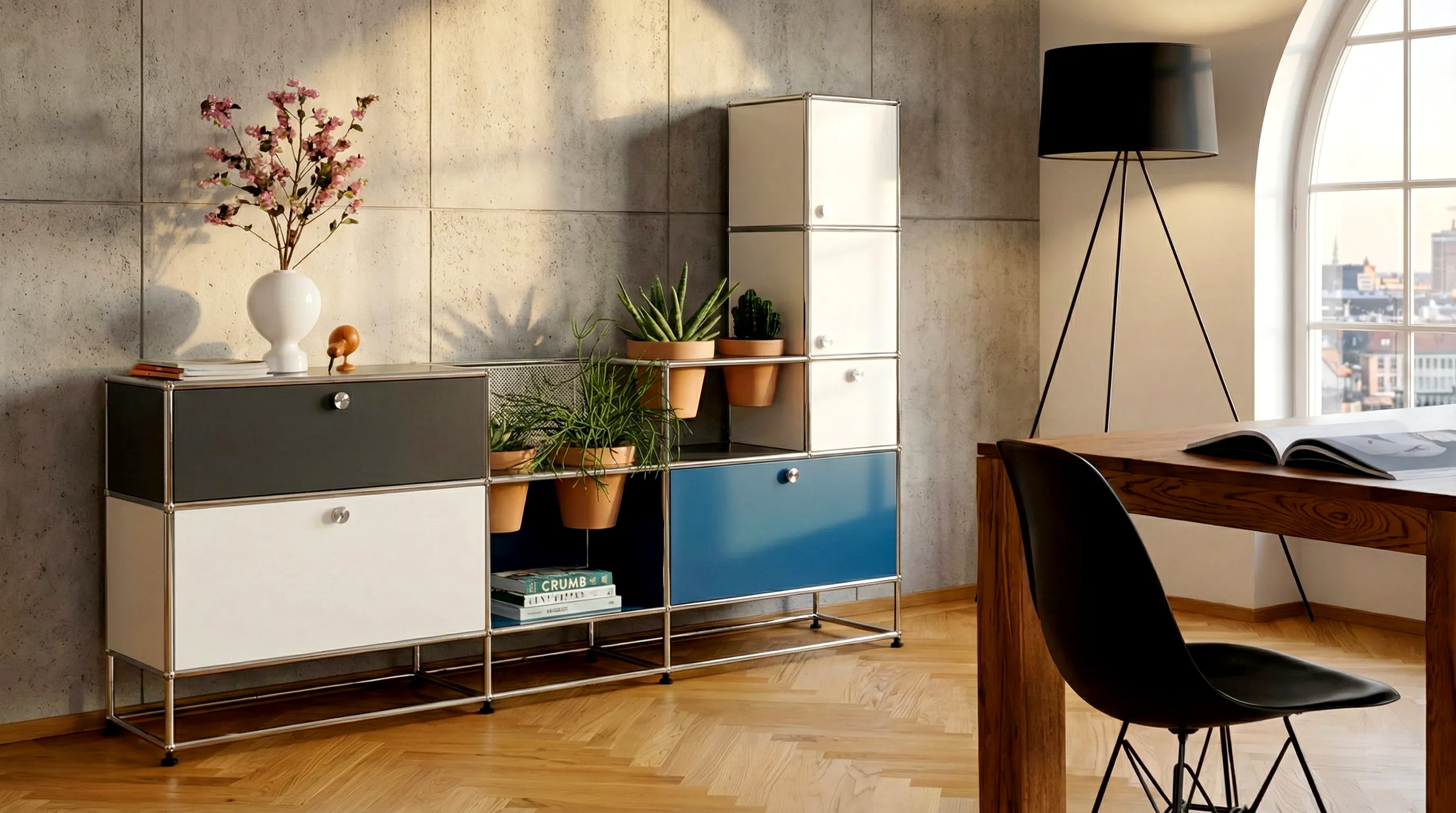 The History of Modular Furniture: From Bauhaus to USM HallerExplore the fascinating history of modular furniture from Bauhaus to USM Haller. Learn how design innovation created timeless furniture systems.
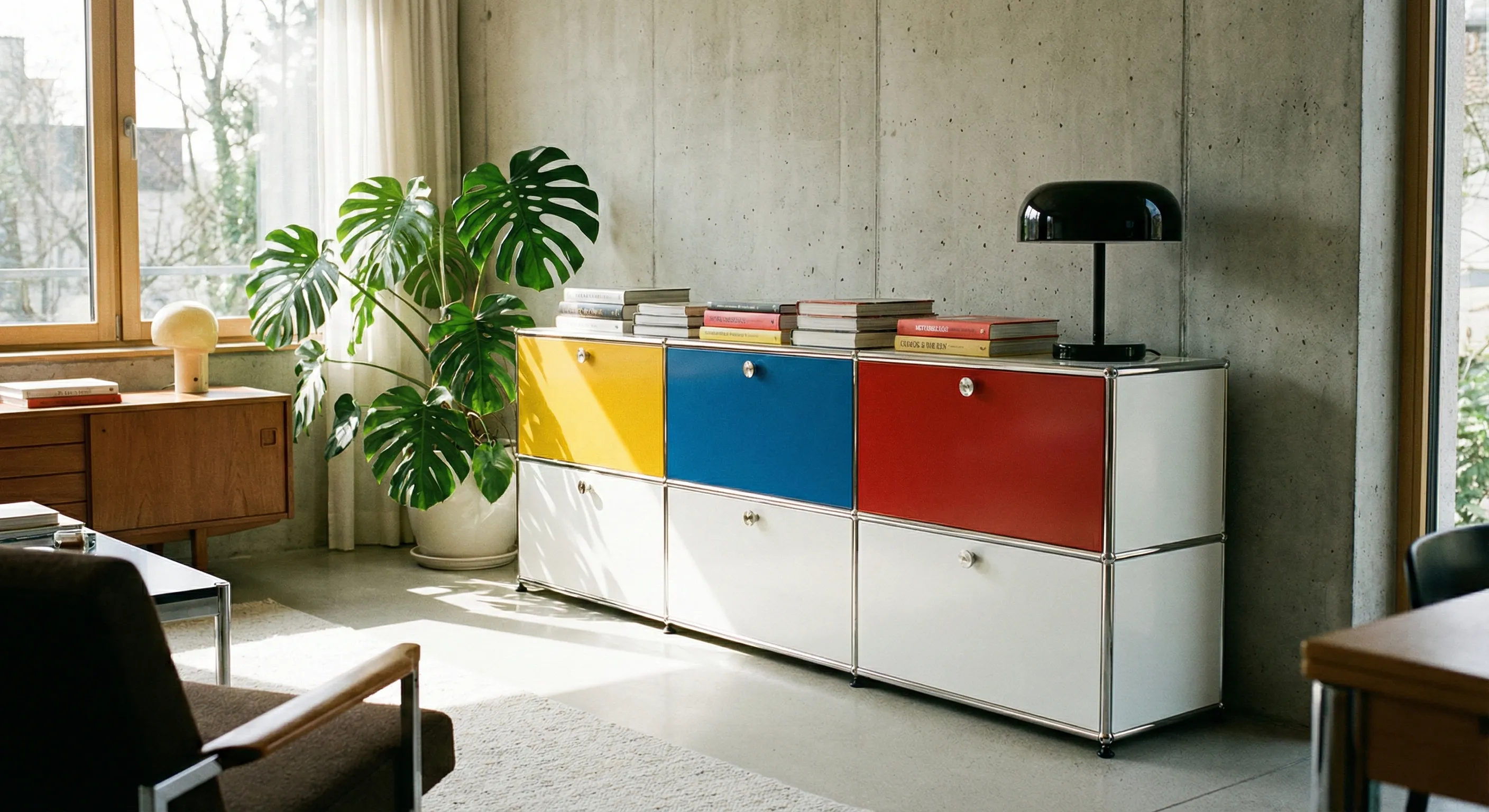 How to Care for and Maintain Your Modular FurnitureKeep your USM Haller and Klackjoy modular furniture looking new. Complete care guide covering daily cleaning, maintenance, repairs, and long-term preservation.